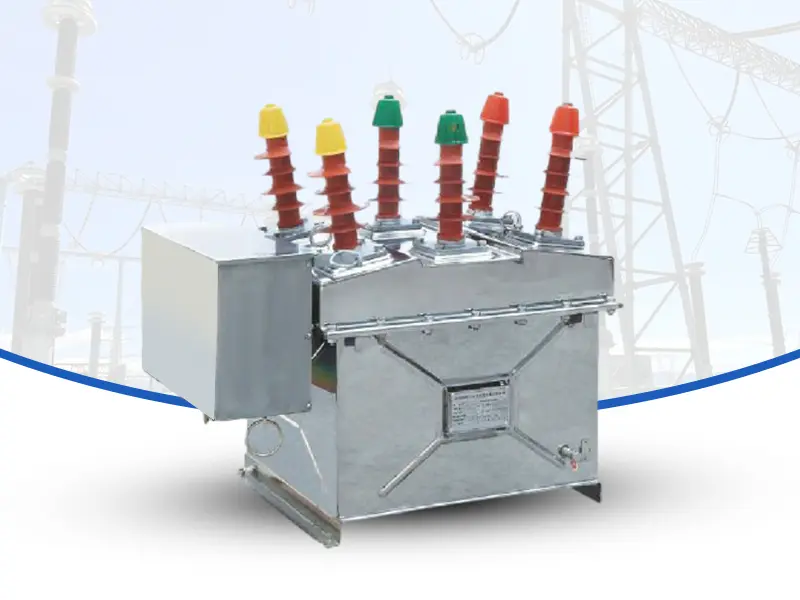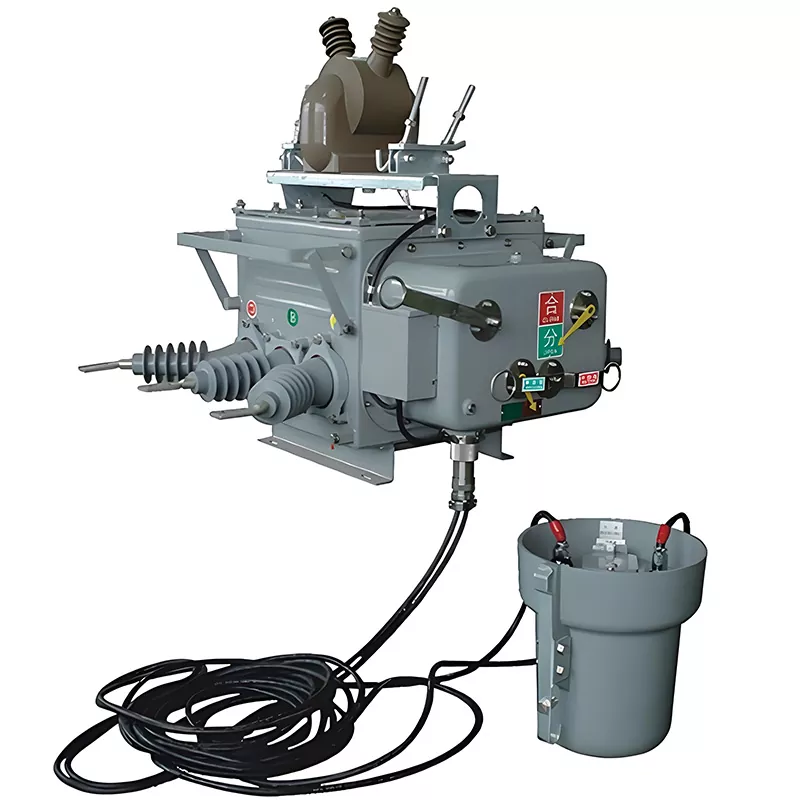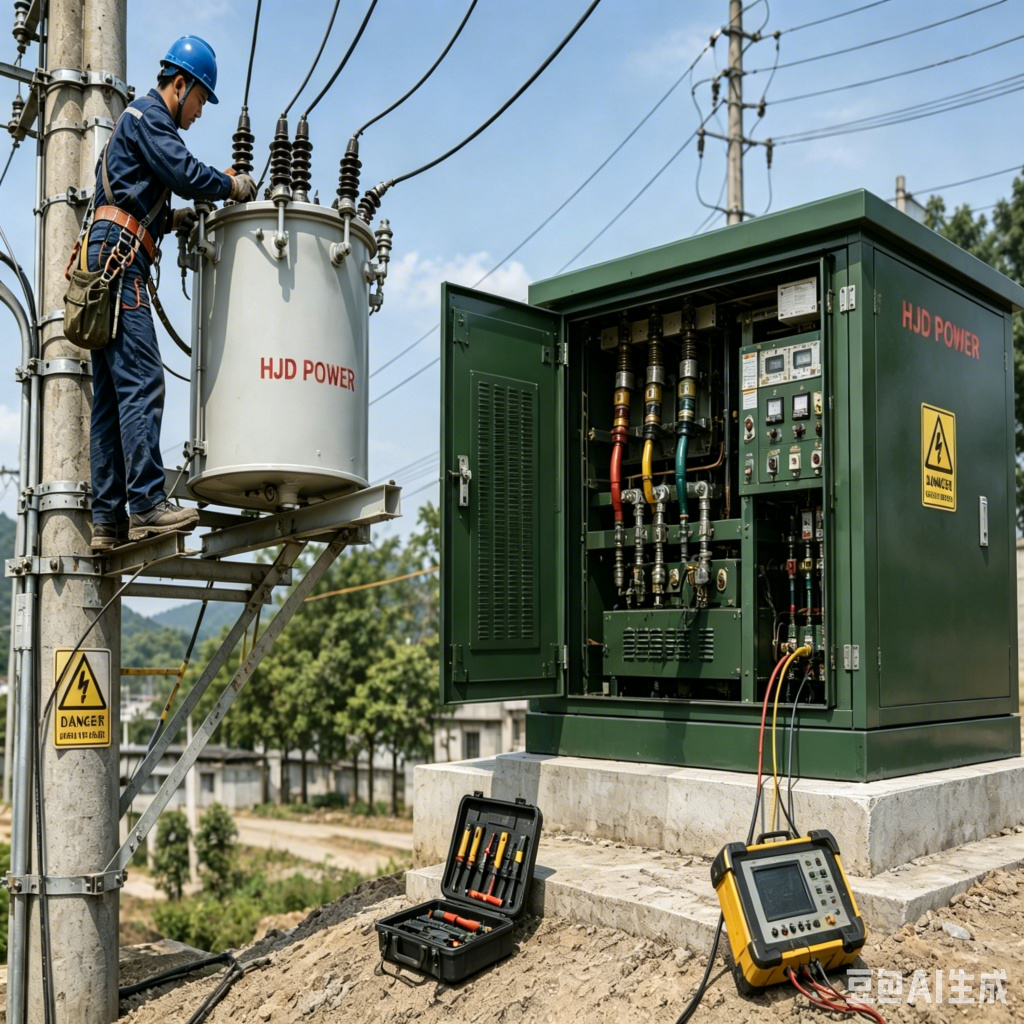
Medium-voltage distribution networks need reliable switching and protection equipment to manage overloads, short circuits, and other abnormal operating conditions. In overhead distribution systems, installing the switching device directly on a utility pole can provide a practical way to protect feeders and sectionalize the network. A 12kV Pole-Mounted Vacuum Circuit Breaker is designed for this type of application, combining vacuum interruption technology with an outdoor pole-mounted structure.
Compared with conventional switching equipment that uses oil or other interruption media, vacuum circuit breakers interrupt current inside a vacuum interrupter. Pole-mounted vacuum circuit breakers are widely used on 12kV-class overhead distribution networks, including urban and rural feeders, transformer protection points, and distribution automation applications.
HUAJIDIAN provides medium-voltage power distribution equipment for applications where reliable switching, outdoor installation, and network protection are important considerations.
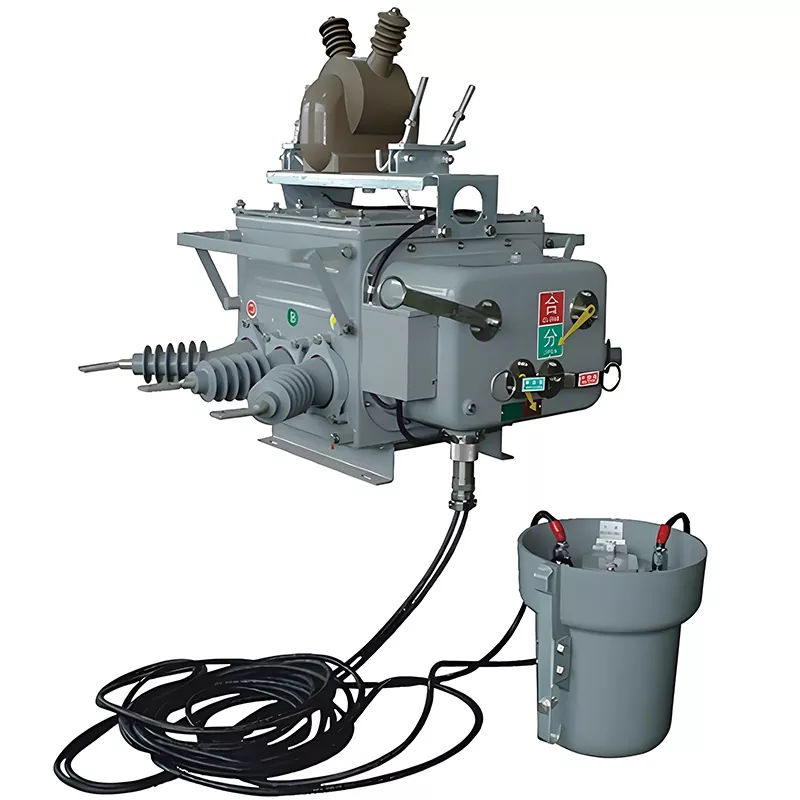
Overhead distribution networks cover long distances and may supply residential areas, commercial facilities, industrial sites, and rural communities. A fault occurring on one section of the line can affect downstream users if it is not isolated efficiently.
A pole-mounted circuit breaker can be installed at a suitable point along the feeder, allowing the electrical network to be divided into protection and switching sections. This arrangement can help utilities isolate affected sections while maintaining power supply to unaffected areas.
Pole-mounted equipment is exposed to rain, humidity, dust, temperature changes, and other outdoor conditions. Therefore, the mechanical structure, insulation system, sealing arrangement, and electrical components need to be suitable for field installation.
Modern outdoor vacuum circuit breakers commonly use sealed or insulated structures to protect critical components from environmental influences. Embedded-pole designs can also help protect the vacuum interrupter from moisture and dust.
The vacuum interrupter contains electrical contacts inside a controlled vacuum environment. When the circuit breaker opens during a fault or switching operation, the contacts separate and the vacuum interrupter interrupts the current.
This technology is widely used in medium-voltage distribution because it provides a compact interruption system without requiring the circuit breaker to use insulating oil or SF6 gas as the primary interruption medium.
Distribution networks may require circuit breakers to perform switching operations during network maintenance, feeder reconfiguration, fault isolation, and restoration. The mechanical operating mechanism and vacuum interrupter therefore need to be selected according to the expected operating frequency and duty cycle.
For projects involving frequent switching, buyers should evaluate the manufacturer's specified mechanical and electrical endurance rather than assuming that all vacuum circuit breakers have the same operating capability.
One of the primary applications is protection of 12kV-class overhead distribution feeders. The circuit breaker can disconnect the feeder when abnormal current conditions occur, helping prevent a fault from affecting a larger part of the distribution network.
Pole-mounted vacuum circuit breakers are commonly used for feeder switching and sectionalizing on medium-voltage overhead networks.
A circuit breaker installed near a pole-mounted transformer can provide a controlled switching and protection point for the associated distribution equipment. The exact protection arrangement depends on transformer rating, network configuration, fault levels, and utility requirements.
Both urban and rural networks can use pole-mounted medium-voltage circuit breakers. Rural feeders may cover long distances with relatively large numbers of switching points, while urban networks may require sectionalizing and protection around concentrated loads.
Solar and wind generation projects can introduce additional switching and protection requirements at medium-voltage grid connection points. Depending on the project design, an outdoor vacuum circuit breaker can provide a switching and protection interface between generation equipment and the distribution network.
When a suitable protection controller is integrated with a pole-mounted vacuum circuit breaker, the equipment can detect defined abnormal conditions and initiate circuit interruption. This can reduce the time required to isolate a faulted feeder section.
Some overhead distribution faults are temporary, such as faults caused by lightning, branches, or other short-duration events. When the circuit breaker is configured with a suitable recloser controller, automatic reclosing can be used to restore the circuit after a temporary fault.
Pole-mounted vacuum circuit breakers can be combined with controllers to provide automatic recloser functions in distribution networks.
For smart distribution networks, the circuit breaker can be combined with current transformers, voltage sensing, control units, communication equipment, or feeder terminal units. Depending on the configuration, these functions can support remote monitoring, remote switching, and distribution automation.
The actual communication protocol and automation functions should be confirmed with the equipment supplier because they vary between circuit breaker configurations.
The rated voltage of the circuit breaker should match the electrical network. A product described as a 12kV circuit breaker is intended for a specific medium-voltage system and should be selected according to the actual system voltage and applicable standards.
The rated current should be selected according to the continuous load current and expected operating conditions of the feeder. Buyers should also consider future load expansion when designing new distribution projects.
The circuit breaker must be capable of interrupting the prospective short-circuit current at its installation point. This parameter should be determined through the project's fault-level calculation rather than selected only according to the nominal system voltage.
Outdoor equipment may be exposed to humidity, pollution, dust, salt spray, temperature variations, and strong sunlight. The insulation structure and enclosure should therefore be appropriate for the installation environment.
For coastal, industrial, high-altitude, or heavily polluted locations, buyers may need additional environmental and insulation requirements when specifying the equipment.
The supporting pole and mounting structure need to withstand the mechanical load of the equipment as well as environmental forces such as wind. Mounting hardware should be selected according to the circuit breaker's dimensions and the local installation requirements.
Primary terminals, grounding connections, control wiring, and sensing circuits should be installed according to the manufacturer's wiring diagram. Incorrect connections can affect both protection performance and equipment safety.
A suitable grounding system is essential for outdoor medium-voltage equipment. The grounding arrangement should comply with the electrical design and applicable local standards, particularly where the circuit breaker is installed on utility poles exposed to lightning and other transient conditions.
Before energization, installers should check mechanical operation, electrical connections, insulation condition, control circuits, protection settings, and grounding. Where the equipment is part of an automated distribution network, communication and remote-control functions should also be tested before commissioning.
The external insulation surfaces should be inspected periodically for contamination, cracking, damage, or other conditions that could affect insulation performance. The inspection frequency should reflect the local environment and utility maintenance procedures.
The operating mechanism should be inspected according to the manufacturer's maintenance requirements. Abnormal operating noise, delayed opening or closing, or inconsistent mechanical movement should be investigated before the equipment is returned to service.
Primary connections, grounding points, auxiliary wiring, and control connections should be checked for looseness, corrosion, or other signs of deterioration. Outdoor installations may require additional attention in areas with high humidity or salt exposure.
Where the circuit breaker is connected to an intelligent controller or protection relay, settings should be reviewed according to the distribution network protection scheme. Changes to protection parameters should be performed by qualified personnel following the project's protection coordination requirements.
| Consideration | Pole-Mounted Vacuum Circuit Breaker | Traditional Outdoor Switching Equipment |
|---|---|---|
| Installation | Mounted directly on a suitable pole structure | May require a dedicated ground-level installation |
| Interruption Medium | Vacuum interrupter | Depends on equipment type |
| Application | Overhead feeders, transformer protection, sectionalizing | Varies according to equipment design |
| Automation | Can be integrated with controllers and communication equipment | Depends on equipment configuration |
| Outdoor Exposure | Designed for outdoor installation | Depends on enclosure and equipment type |
| Maintenance | Requires inspection of mechanical, electrical, and insulation components | Depends on the switching technology |
| Selection Item | Buyer Consideration |
|---|---|
| Rated Voltage | Confirm compatibility with the 12kV distribution system |
| Rated Current | Match the continuous load requirements |
| Breaking Capacity | Confirm against the calculated short-circuit current |
| Frequency | Verify compatibility with the local power system |
| Insulation Level | Consider network and environmental requirements |
| Operating Mechanism | Confirm manual, motorized, or other required operation |
| Protection Functions | Determine whether overcurrent, earth-fault, or other protection is required |
| Automation | Confirm controller, remote-control, and communication requirements |
| Mounting | Check pole structure and installation dimensions |
| Certification | Verify applicable standards and approvals for the destination market |
HUAJIDIAN focuses on power transmission and distribution equipment for medium-voltage applications. For a 12kV outdoor circuit breaker project, the selection process should consider the network structure, load current, fault level, installation environment, protection strategy, and automation requirements together.
Different utilities and industrial users may require different combinations of circuit breaker operation, protection, control, sensing, and communication. Buyers should provide the project requirements before finalizing the equipment configuration.
A 12kV Pole-Mounted Vacuum Circuit Breaker can be considered for overhead feeder protection, distribution transformer protection, sectionalizing points, and suitable distribution automation projects. HUAJIDIAN supports customers in evaluating equipment specifications according to their electrical network and project requirements.
A 12kV Pole-Mounted Vacuum Circuit Breaker provides a practical protection and switching solution for medium-voltage overhead distribution networks. Its pole-mounted structure allows the equipment to be positioned directly along the distribution line, while vacuum interruption technology provides a well-established method for interrupting fault and load currents.
For distribution utilities and industrial users, the most important selection factors include rated voltage, current, short-circuit breaking capacity, insulation performance, outdoor environmental conditions, mounting arrangement, protection functions, and automation requirements. Proper installation, commissioning, and periodic inspection are equally important for reliable field operation.
With a focus on medium-voltage power equipment, HUAJIDIAN can provide application-oriented solutions for customers developing, upgrading, or maintaining 12kV distribution networks.